


Professor Dorina Cadar of the Brighton and Sussex Medical School, University of Sussex & University of Brighton, United Kingdom, will present ‘From Risk to Resilience: Rethinking Ageing, Brain Health, and Dementia Prevention’ at The 14th European Conference on Education (ECE2026), The 14th European Conference on Arts & Humanities (ECAH2026), and The 6th European Conference on Aging & Gerontology (EGen2026), to be held in London, United Kingdom, and online.
Professor Cadar serves as Director of the CEDAR Lab and Deputy Director of the Centre for Dementia Studies and Deputy Director of Research and Knowledge Exchange at Brighton and Sussex Medical School. Her talk will explore healthy ageing, cognitive resilience, and dementia prevention across the lifecourse, drawing on her leadership in ageing and behavioural science at Brighton and Sussex Medical School. The keynote will feature insight regarding ongoing healthy ageing research programmes as well as their interdisciplinary approaches and emerging directions visible within the field.
This keynote presentation will be held both onsite in London and online via live-stream. To participate in ECE/ECAH/EGen2026 as an audience member, please register for the conference via the conference website.
The presentation will also be available for IAFOR Members to view online as part of their membership benefits. To find out more about becoming an IAFOR Member, please visit the IAFOR Membership page.
Speaker Biography
Dorina Cadar
Brighton and Sussex Medical School, University of Sussex & University of Brighton, United Kingdom
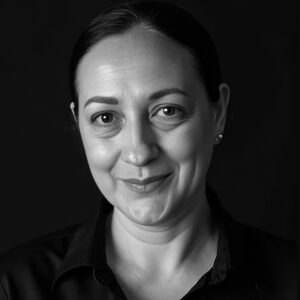 Professor Dorina Cadar is a Professor in Ageing and Behavioural Science at Brighton and Sussex Medical School in partnership with the University of Brighton and the University of Sussex, United Kingdom. She leads interdisciplinary research on healthy ageing, cognitive resilience, dementia prevention, and population mental health. She is Director of the CEDAR Lab and Deputy Director of the Centre for Dementia Studies and Deputy Director of Research and Knowledge Exchange at Brighton and Sussex Medical School. Her research combines epidemiology, behavioural science, neuroscience, and public health approaches to investigate how social, psychological, cardiovascular, and lifestyle factors influence cognitive ageing and brain health across the lifecourse. She works extensively with large longitudinal cohort studies, including the English Longitudinal Study of Ageing and UK Biobank, alongside community and translational research focused on resilience, prevention, and inequalities in ageing. Professor Cadar has led and collaborated on projects funded by organisations including UKRI, NIHR, UKHSA, Alzheimer’s Research UK, and the British Academy. She is also actively involved in public engagement initiatives aimed at raising awareness and improving communication about healthy ageing and dementia prevention, including projects selected for national scientific exhibitions and community outreach programmes.
Abstract

From Risk to Resilience: Rethinking Ageing, Brain Health, and Dementia Prevention
Population ageing represents one of the greatest scientific, societal, and public health challenges of the 21st century. While ageing and dementia research has traditionally focused on decline, disease, and dependency, there is increasing recognition that resilience, adaptation, and prevention are equally important for understanding healthy ageing and maintaining brain health across the lifecourse. This keynote will explore how interdisciplinary approaches across behavioural science, neuroscience, public health, education, and community research can help reshape the way we think about ageing and dementia prevention in contemporary society.
Drawing on evidence from longitudinal cohort studies, translational research, and community-based projects, the presentation will examine how cardiovascular health, mental wellbeing, social connection, education, lifestyle behaviours, and health inequalities interact to influence cognitive ageing and dementia risk. The lecture will further discuss the role of public engagement, inclusive communication, and community participation in promoting healthier and more resilient ageing societies.
Examples from ongoing research programmes in healthy ageing, resilience, dementia prevention, and public engagement will illustrate how resilience-based approaches can support not only dementia prevention, but also quality of life, wellbeing, independence, and social participation in later life. Emerging directions in digital health, artificial intelligence, and personalised prevention strategies will also be considered, alongside the importance of interdisciplinary collaboration across science, healthcare, education, and the humanities.
The keynote concludes by arguing for a broader and more hopeful framework for ageing research and policy, one that moves beyond disease-centred narratives and towards supporting resilience, dignity, inclusion, and healthy ageing across diverse communities.
